
Improve Your EPC Rating
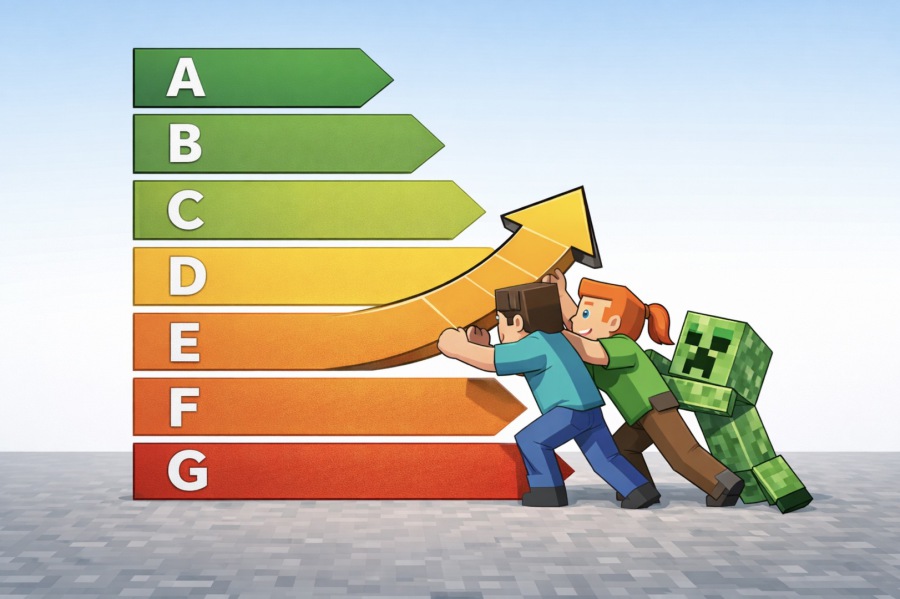
The current methodology for EPC assessments of existing dwellings in England & Wales is RDSAP 10. A significant methodology overhaul from RDSAP to the Home Energy Model (HEM) is proposed for 2026 onwards. Recent Government consultations for England & Wales indicate changes to the format of EPCs and an increase in MEES requirements for properties in the Private Rental Sector (PRS) for 2028 and 2030. Therefore, approaches for improving EPC ratings in the near future will change.
I'd like the EPC rating of your property to be the best it can reasonably be.
In this section you'll find a number of areas to consider where it might be possible to improve the EPC rating of your property.
We'll cover things that range in both cost and ease, from low cost to high cost, and from easy to implement up to more involved. I hope though you can work through the list and pick out things that are suitable and accessible for your property.
Some of these things will actually improve the energy performance of your property, and some will help you around intricacies of how the assessment methodology works.
In particular, I recommend you take a look at the 'Heating Systems' page first, which covers two particular intricacies around 'Secondary Heating' and the count of 'Heated Habitable Rooms'. That one page might help you significantly.
Please note your property will produce different levels of improvement to any indications provided in these pages due to differences between my property and yours. Various factors contribute together in the calculation of an EPC rating.
The best approach to improve your EPC rating is to engage with a local Domestic Energy Assessor (DEA). They can model changes to your property and advise on what you would need to do to increase the rating, or model changes you have in mind and advise accordingly.
It's important to do this before making decisions, as you will be working from a position of certainty when you do finally proceed with any work.
Just a few more caveats and we'll get going:
We're looking here at the assessment of existing domestic properties, where the RdSAP methodology is used, ie not domestic new builds (SAP) or commercial properties (SBEM).
In the next few months and years, changes are due to EPC metrics, methodology and MEES requirements and these will changes approaches to rating improvement.
If you need to register an exemption from the MEES regulations, please be aware that only recommendations on an EPC or similar report will be considered 'relevant energy efficiency improvements', such as when considering the cost cap.
Here we go:
- Disregard Mindless Chit-Chat
- Check EPC Features Table
- Low Energy Lighting
- Loft Insulation Depth
- Cavity Wall Insulation
- Internal / External Wall Insulation
- Floor Insulation (Solid Floor)
- Floor Insulation (Suspended Timber Floor)
- Glazing
- Heating Systems
- Heating Controls
- Heating Pump age
- Water Heating
- FGHRS & WWHRS
- High Heat Retention Storage Heaters
- Conservatories
- 'Room In Roof'
- Mansard Roof
- Beware EPC Mistakes
- Resolve PCDB Issues
- Provide Documentary Evidence
- Solar Thermal Panels
- Solar PV & Home Batteries
- Solar PV Diverter
- Wind Turbine
- Electricity & Gas Meters
- Air Pressure Testing
- Request EPC Assessment Data Sharing
- Don't Give Up
- Become Qualified as a Domestic Energy Assessor (DEA)
If you're still reading, I'd be really interested to hear from you. Please let me know if anything in this section of the website has been helpful. Is there anything that has been a surprise? Is there anything that has really helped you? Do you have anything you would add? Please click on the Contact page and send me an email. Many thanks.
Piers
 Print
Print 