
Case Study 7 - Detached Bungalow - D to a C
Introduction
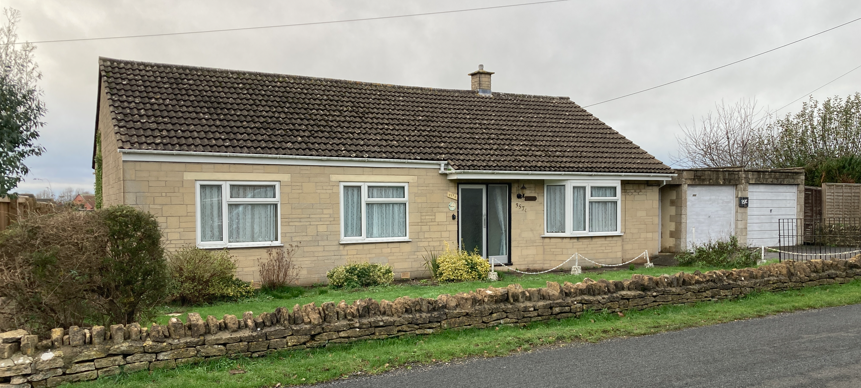
This is a 3-bed detached bungalow built in the early 1960s.
The current EPC was produced in November 2025 using RDSAP 10, and the rating is 63D.
We are reviewing the current EPC, with a view to issuing our own, and seeing what would be required to get a 69C rating or better on this property.
Reviewing The Existing EPC
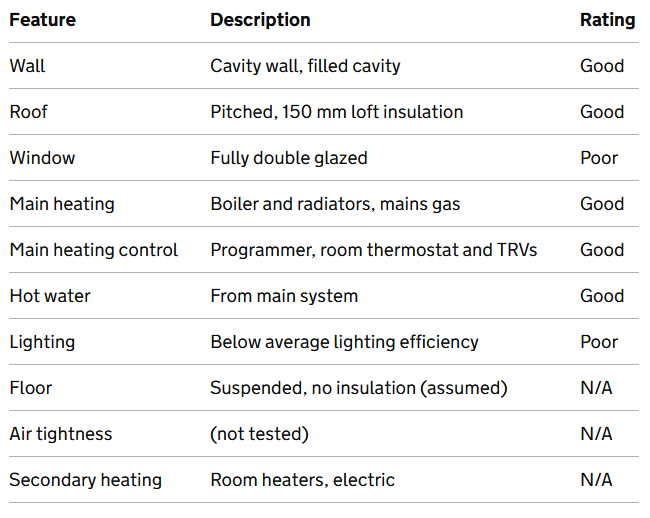
Here is the features table from the existing EPC:
Wall
There is one wall type listed in the features table. A mistake has therefore been made in the EPC assessment because two wall types should be listed instead. This bungalow was built in the early 1960s, and a physical extension was added to it in 1984. This extension has a different floor type compared to the original building, and the floor area of the extension is more than 10% of the main building. It should therefore definitely be recorded as an extenson in the assessment, and as a result there would be two wall types listed. The walls of the original building and also the extension are both cavity walls. Drill holes on the outside of the main building indicate that cavity wall insulation was retrofitted to this building part, but the walls of the extension do not have any such drill holes, so CWI has not been retrofitted to the extension. By 1983 onwards, the predominant construction method with cavity walls was to include CWI in order to meet the thermal performance required by building regulations which had tightened up again just previously in 1982. We should therefore see wall entries for both:
- 'Cavity wall, filled cavity' - representing the main building (u=0.7)
- 'Cavity Wall, as built, insulated (assumed)' - for the extension (u=0.6)
When we re-assess this property, our EPC will indicate these two wall types. This is important because the assessment methdology uses slightly differente u-values for these two walls, as shown above.
Roof
The roof of both the main building and the extension are indeed pitched, with access to the loft, but from examination we can see the insulation depth is clearly only 100mm, not 150mm as stated. This is error number two in this EPC. The current EPC rating will have been inflated slightly due to this error, and when we produce our own EPC, the rating will be reduced slightly in comparison, when we declare the correct amunt of insulation. We will only see one Roof entry on our EPC because both the main building and the extension have the same level of insulation.
Windows
The EPC describes the property as being fully double glazed. This in fact is not true, and indicates error number three. There is one single glazed window present. The glazing is not the latest technology, the double glazed windows are all pre 2002, and there are a couple of metal framed windows (both are doors recorded as windows in fact), but when we produce our own EPC it will say 'Mostly double glazing'. This error will have inflated the rating slightly, but not by much at all.
Main Heating & Main Heating Controls & Hot Water
This looks fine, although we cannot see all the information recorded by simply looking at the Features table here. We do know that the thermostat used in the property is a Worcester Comfort 1 RF, which is a compensating controller. We will therefore make sure to register this in the assessment to take advantage of any small gain this provides.
Lighting
This looks fine. There are several incandescent and fluorescent bulbs in the property.
Floor
Most of the main building is indeed a suspended timber floor and we have looked underneath this to evaluate how much effort would be required to install insulation. However, the bathroom and the original kitchen floors are both solid floors, and these do not appear on the features table. Also, the flors of the extension are also solid as well. This includes the extended kitchen part and the dining room. This therefore is error number four. When we produce our own EPC we will see both types of floor represented in the features table.
Secondary Heating
If you ever see electric room heaters listed as Secondary Heating, and the main heating runs on gas, you have an outstanding opportunity to improve the EPC rating. In our case, the electric room heater recorded on the current EPC assessment was an electric feature fireplace heater in the living room. However this feature fireplace is a plug-in type and it is not fixed to the wall/chimney breast. It is therefore easily removeable and classed as a portable heater. This is error number five. The heater should not have been recorded in the assessment. Because this is the only source of electric heating in the property, and all habitable rooms are currently heated by the main heating system - radiators from the gas boiler - this will have reduced the current rating by a few points, likely five points, but we will confirm this later. When we produce our own EPC, there will be nothing listed under Secondary Heating.
Floor Area
This is presented at the top of the EPC and at 103 m2 is only 2 m2 different to my measurements, so very close, and within the 5% tolerance allowed by the methodology.
Additional Data
Some limited additional information from EPC assessments is available from the Get Energy Performance Data website:
https://get-energy-performance-data.communities.gov.uk/
From there, we can check:
- Construction Dateband: England & Wales: 1950-1966 - this is correct, the property was built in 1964.
- Main building floor height - this matches my measurement
- Count of Habitable Rooms & Heated Habitable Rooms - these are both 1 less than my count but this comes down to whether the kitchen has enough room for a table and four chairs.I think there is enough room but a different assessor might think differently as it's marginal. It shouldn't affect the rating too much though. I'll check later.
- Extension Count: 0 - proving no extensions were declared.
- Electricity tariff: Single - correct
A Fresh Baseline EPC Assessment
The next step was to conduct a fresh EPC baseline assessment of our own.
This worked out as a 68D, which is 1 point short of a C band rating.
EPC ratings are actually calculated to four decimal places behind the scenes, before being rounded to the nearest integer.
In our case, the rating was
To be continued.
 Print
Print 