
The Home Energy Model
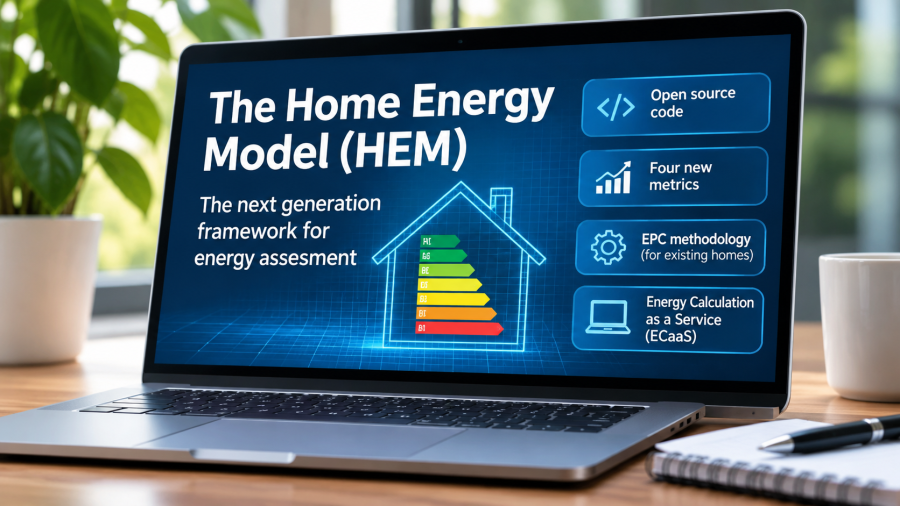
What is the Home Energy Model (HEM)?
Energy Performance Certificates (EPCs) are about to undergo a significant overhaul, with the introduction of a new assessment methodology and a completely redesigned EPC format, currently expected in late 2027 in England & Wales.
The existing SAP and RdSAP methodologies will be retired and replaced by a new approach known as the Home Energy Model (HEM).
Strictly speaking, HEM is the name given to the underlying calculation engine. Additional layers of software, known as wrappers, build on this engine to provide specific functionality.
These include the assessment of existing dwellings for EPC purposes, as well as building control calculations and reports for new-build properties.
For EPC assessments of existing dwellings, the government appear to have chosen the new name HEMIE.
Changes are also proposed to the Minimum Energy Efficiency Standards (MEES) regulations, which set the minimum energy efficiency requirements for privately rented properties. A number of specific exemptions will also be available.
Open Source Development
One of the significant changes introduced with HEM is the Government's decision to make the underlying calculation software publicly available as open-source code. Rather than relying solely on a written technical specification, the actual Python source code has been published in a series of publicly accessible repositories. This allows anyone with an interest to examine how the methodology has been implemented, follow the calculations, and gain a much clearer understanding of how the model works in practice.
There are actually two implementations of the HEM calculation engine. The Python version, developed by BRE under commission from Government, acts as the reference implementation of the methodology. A separate, high-performance implementation has been developed in Rust by MHCLG for use within its Energy Calculation as a Service (ECaaS) platform. Importantly, the Rust source code has also been made publicly available, although ECaaS itself operates as a centrally hosted service.
For those interested in understanding the methodology in detail, the Python repositories are particularly useful because they provide an accessible way of examining the actual calculation logic, including the additional functionality provided by the various assessment wrappers.
Repositry Locations
Here are some links to the various repositories that you may find useful or interesting:
Rust Implementation of HEM
https://github.com/communitiesuk/epb-home-energy-model
ECAAS API
https://github.com/communitiesuk/epb-ecaas-api
ECAAS Front End
https://github.com/communitiesuk/epb-ecaas-frontend
Python reference implementation of HEM
https://dev.azure.com/Sustenic/Home%20Energy%20Model%20Reference/_git/Home%20Energy%20Model
Python EPC Wrapper
It is the last one in which I am particualrly interested.
Disclaimer
Please be aware that the code should not be treated as a definitive representation of the final methodology. The publicly available version is incomplete, remains under development and is subject to change. It should not be relied upon for any official purpose.
The repository's README file makes this clear, stating:
“The EPC wrapper is currently in development and should not be used for any official purpose.”
Nevertheless, while the code cannot be relied upon as a definitive guide to how the final EPC methodology will operate, it does provide a useful insight into the approach currently being developed. By examining the available code, we can begin to understand how certain aspects of the assessment process are being handled and what the underlying logic may look like. It is important, however, to remember that these are observations based on a work in progress, rather than confirmation of how the final methodology will function.
Looking into the Python EPC wrapper
The EPC wrapper contains the logic specific to the EPC methodology for existing dwellings. This is the part that interests me most.
If you're particularly interested, you can explore the Python code yourself.
One method is to use an AI Codes agent to examine the codebase and answer questions about how it works. This is the approach I took before following up by examining specific sections of the code in more detail.
The following pages contain information gleened in this way:
- What's 'missing' from the EPC wrapper
- The Smart Readiness Metric
 Print
